
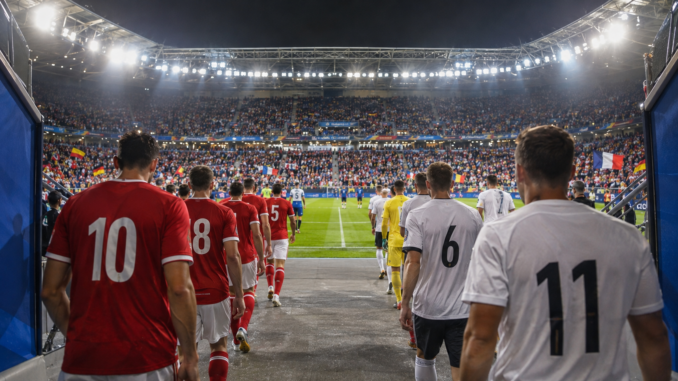
Every edition of the European Championship brings together more than national teams competing for a trophy. It creates a meeting point for different footballing traditions, generations of supporters and players who carry the expectations of entire countries. A tournament can produce unexpected heroes, transform established reputations and leave behind matches remembered long after the final whistle. Exploring European Championship match replays makes it possible to revisit these encounters and understand how their defining moments developed.
The tournament occupies a special place in international football because it combines the intensity of knockout competition with the diversity of European playing styles. National teams arrive with different strengths, tactical preferences and levels of experience. Some rely on technical possession, others prefer direct attacking football, while several build their success on defensive organisation and collective discipline. When these approaches meet, the result can be difficult to predict.
A Tournament Where National Football Identities Meet
The European Championship offers a rare opportunity to observe different football cultures competing within the same structure. National teams often reflect the traditions that have shaped their domestic game, although modern coaching has made these identities more flexible.
Spain has frequently been associated with technical passing and positional control. Germany has built a reputation for organisation, intensity and adaptability. Italy has traditionally been recognised for defensive intelligence, while the Netherlands has contributed influential ideas about space, movement and attacking structure. Other national teams have developed distinctive approaches based on physical strength, rapid transitions or creative individual players.
These descriptions are not fixed rules. Football evolves, and each generation introduces new interpretations. A team known for patient possession may become more direct under a different manager, while a traditionally defensive side can develop an ambitious pressing game.
This variety is one of the reasons the tournament remains so compelling. A match between two national teams is not simply a contest between eleven players on each side. It can also represent a meeting of different tactical philosophies and sporting histories.
The Group Stage: Where Tournament Stories Begin
The group stage is often underestimated because the most dramatic moments tend to occur during the knockout rounds. Yet the opening matches establish the conditions that shape everything that follows.
Teams must balance the need to collect points with the importance of maintaining physical freshness. A strong opening performance can create confidence, but an early defeat may place considerable pressure on the remaining fixtures. Even a draw can have different meanings depending on the strength of the group and the results of other teams.
Managers also use these matches to assess their opponents. The first game may reveal unexpected weaknesses, while the second can involve tactical changes designed to address them. By the final group fixture, some teams need an aggressive approach, whereas others may prioritise control and defensive stability.
The full context becomes especially important when revisiting these games. A goal scored in the opening round might later prove decisive in determining qualification. A substitution that initially seemed routine can become a turning point in a team’s tournament campaign.
Knockout Football and the Pressure of One Decisive Moment
Once the competition reaches the knockout stage, the character of the matches changes. There is no opportunity to recover from elimination through another group fixture. Every decision carries greater consequences, and teams must find a balance between attacking ambition and the need to avoid costly mistakes.
This pressure can produce fascinating tactical contests. Some managers prefer to establish control early, believing that sustained possession will reduce the opponent’s opportunities. Others begin cautiously, attempting to keep the match close before introducing more attacking options later.
Extra time creates another layer of complexity. Players must manage fatigue while maintaining concentration, and coaches must decide whether to preserve experienced footballers or introduce fresh legs. Penalty shootouts place the outcome in the hands of individual players, but the psychological pressure is shared by the entire squad.
These situations are among the strongest reasons to revisit complete matches. The final penalty or winning goal may be the most visible moment, but the decisions that led to it often began much earlier.
Tactical Adjustments That Change the Direction of a Match
International tournaments give coaches limited time to prepare their teams, which makes tactical flexibility especially important. A national side cannot always develop the same level of automatisms found in a club that trains together throughout the season.
Managers must therefore rely on clear principles that players can understand quickly. These may include pressing triggers, defensive positioning, the use of wide areas or specific patterns for progressing the ball through midfield.
During a match, the original plan may need to change. An opponent could overload one side of the pitch, exploit space behind the defensive line or prevent the team’s main playmaker from receiving possession. The response might involve moving a midfielder into a different position, changing the pressing structure or introducing an additional forward.
A replay helps reveal the sequence behind these decisions. It becomes possible to identify the moment when a team loses control, recognise how the coach responds and assess whether the adjustment improves the performance.
For viewers interested in the tactical side of football, these details can be just as rewarding as the goals themselves.
Unexpected Heroes and the Power of the Squad
Major tournaments rarely follow a perfectly predictable script. Established stars often attract the most attention, but the decisive contribution can come from a player who was not initially expected to become central to the team’s campaign.
A substitute may score an important goal, a reserve goalkeeper may deliver a crucial performance or a young defender may demonstrate unexpected maturity against experienced opponents. These moments remind supporters that a successful national team requires depth as well as individual quality.
Squad management becomes particularly important as the tournament progresses. Injuries, suspensions and fatigue can force managers to reconsider their preferred line-ups. Players who begin the competition on the bench may become essential during the later stages.
Watching matches again allows supporters to appreciate these contributions in context. A substitute’s impact is easier to understand when the tactical situation before their introduction is clear. Similarly, a defender’s performance may appear more impressive when viewed alongside the pressure created by the opponent’s attacking movement.
Supporters, Stadiums and the Emotional Landscape
The European Championship is also a major cultural event. National colours fill stadiums, supporters travel to follow their teams and cities become gathering places for people sharing the same sporting hopes.
The atmosphere can influence the emotional rhythm of a match. A strong reaction from the crowd after a successful tackle may encourage a team to increase its intensity. A goal can transform the noise inside a stadium, while a late defensive stand can produce a collective sense of relief.
Different countries bring their own traditions to the tournament. Songs, flags, chants and familiar rituals create an atmosphere that reflects national identity without making every supporter experience the event in the same way. The meeting of these traditions is part of what makes the competition distinctive.
Replays preserve more than the result. They allow viewers to return to the atmosphere surrounding the contest, including the reactions of supporters, the behaviour of players after important incidents and the emotional contrast between the two teams.
The Development of Modern European Football
The European Championship also provides a useful perspective on how football changes over time. Each tournament introduces new tactical ideas, different approaches to physical preparation and emerging generations of players.
Earlier editions may reveal a stronger emphasis on particular formations or more traditional positional responsibilities. Later tournaments demonstrate how pressing, flexible attacking roles and coordinated defensive movement have become increasingly important.
The role of technology has also changed the viewing experience. Better camera coverage and detailed match analysis make it easier to understand decisions that once went unnoticed. Viewers can follow the movement of players away from the ball, examine the positioning of defensive lines and recognise the small details that influence a match.
However, the essence of the tournament remains familiar. Football still depends on teamwork, creativity, decision-making and the ability to perform under pressure. Technology may improve how matches are analysed, but it cannot replace the emotion of a decisive goal or the tension of a close contest.
Why Complete Matches Tell a Richer Story
Highlights are an effective way to revisit important incidents, but they offer only a selective view of a tournament match. Goals, penalties and spectacular saves are easy to remember, while the tactical and emotional development of the contest is often left out.
A complete match reveals how opportunities were created and why certain teams gained control. It shows whether a side dominated from the beginning or gradually improved, how defensive organisation changed after a goal and whether substitutions influenced the final stages.
This wider perspective is useful for several kinds of viewers. Supporters can relive the atmosphere of a memorable tournament. Coaches and analysts can examine positioning and tactical decisions. Younger fans can discover earlier generations of players and understand how national teams developed their identities.
There is also a different pleasure in watching a familiar match without concentrating only on its outcome. Knowing the result allows attention to shift towards the smaller moments that may have been overlooked during the original broadcast.
Memories That Continue Beyond the Final
The European Championship is remembered through trophies and famous victories, but its history is also built from unexpected performances, emerging talents and matches that change the direction of a national team’s story.
Every edition introduces new characters and creates moments that become part of football’s collective memory. Some campaigns are defined by the dominance of a favourite, while others are remembered because an underdog challenged expectations. A single match can influence how a generation of supporters remembers a particular summer.
Returning to these encounters provides a chance to appreciate the complete journey rather than a handful of celebrated incidents. The group-stage decisions, tactical adjustments, individual performances and reactions from the stands all contribute to the final story.
That is the enduring appeal of the tournament. It brings together footballing traditions from across Europe and places them in a setting where preparation meets uncertainty. The result may determine who lifts the trophy, but the full experience is shaped by everything that happens before that moment.
Leave a Reply